EPA-registered disinfectants applied to cleaned surfaces and held for the full dwell time, on a routine schedule or on demand after illness.
Cleaning and disinfecting are two different jobs, and most disinfection that fails does so because the first one was skipped. Cleaning removes soil, oils and film. Disinfecting uses a registered product to reduce germs on a surface that is already clean. Spray a disinfectant over a dirty counter and you are mostly wetting the dirt. Premier Cleaning & Janitorial treats them as separate steps in every building: clean first, then disinfect.
We use EPA-registered disinfectants and hold each one for the full dwell time on its label, which is the length of time a surface must stay visibly wet for the product to work. Wiping it dry early wastes the product. We apply disinfection to a mapped list of high-touch points in your building and to restrooms on every service night, and we offer on-demand disinfection after an illness has been reported. We make no health guarantees, because no cleaning service can control who walks in the next morning. What we can promise is a documented process, followed by the same crew, and checked by a supervisor. See the 7-step process.
Scope of work
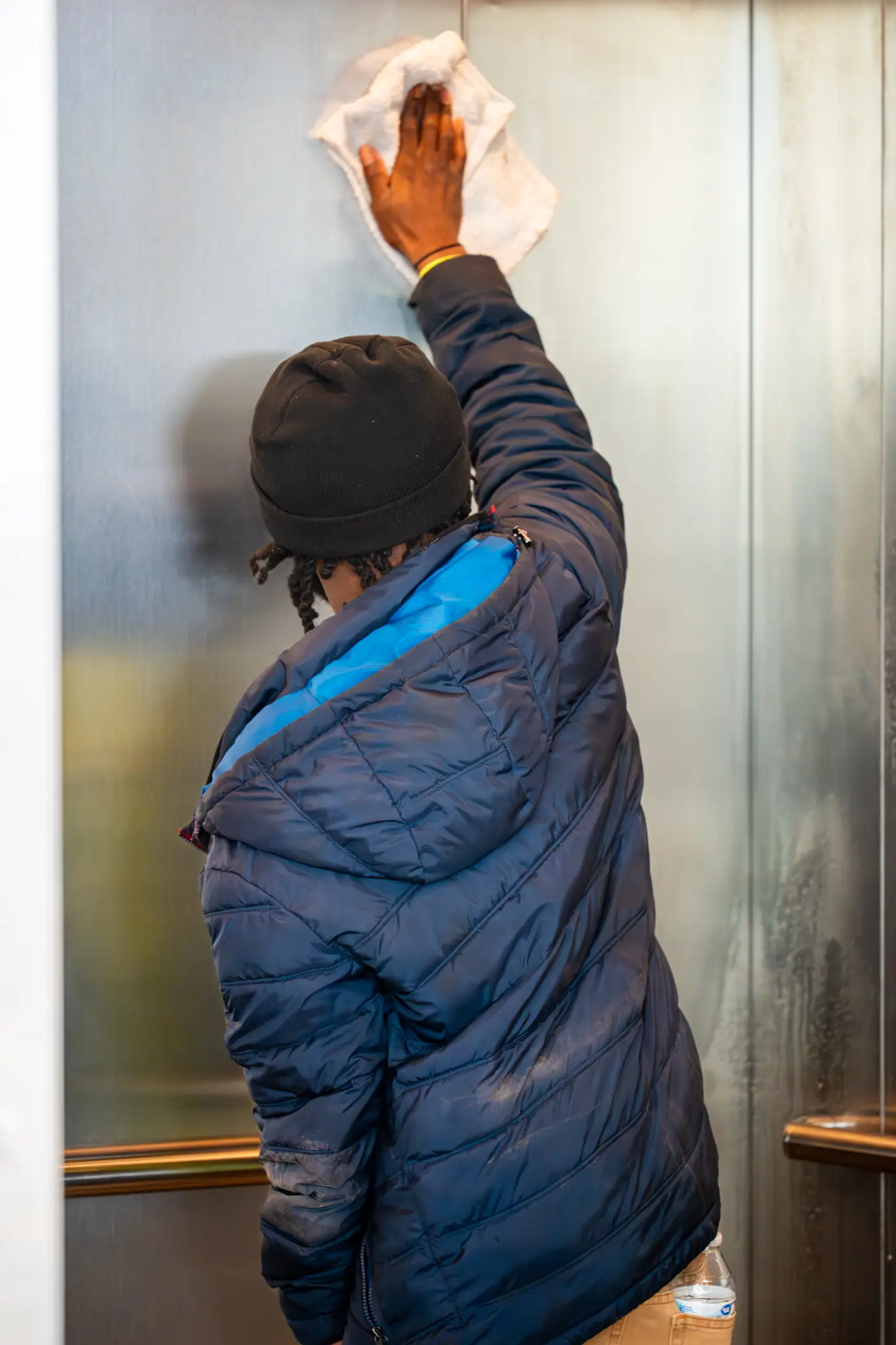
Disinfection is applied after cleaning, to surfaces chosen by how often people touch them.
Who we serve


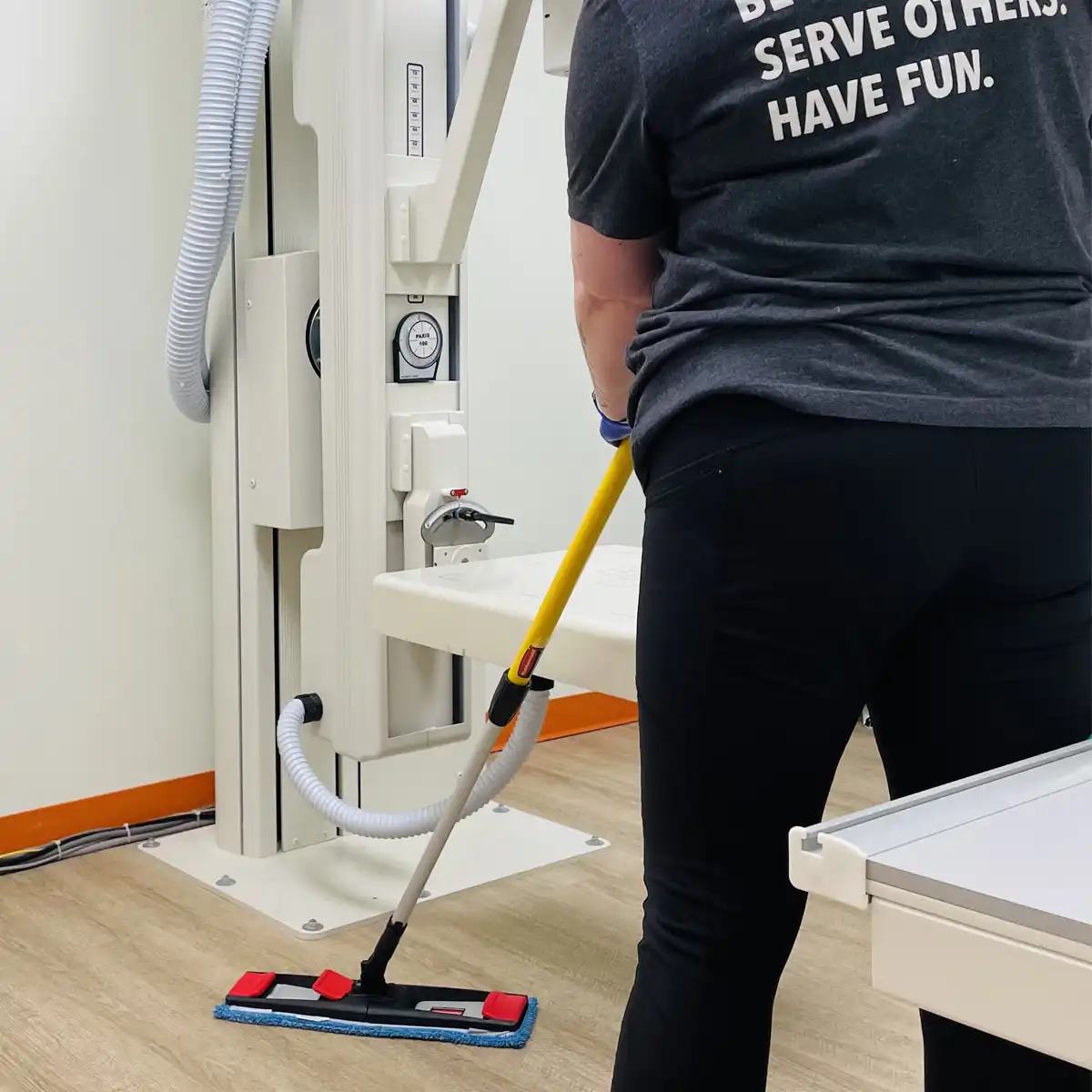
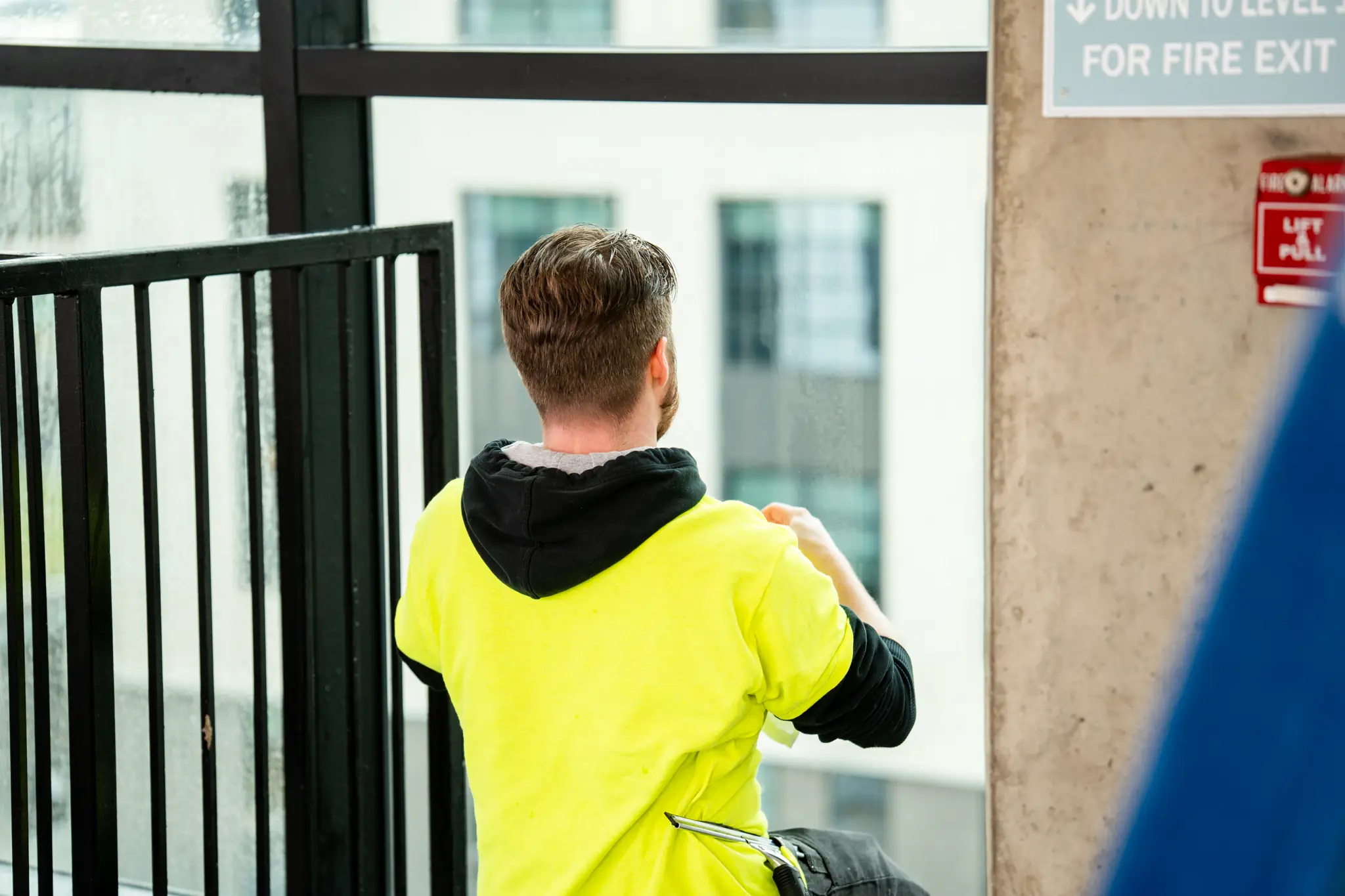
Two separate steps
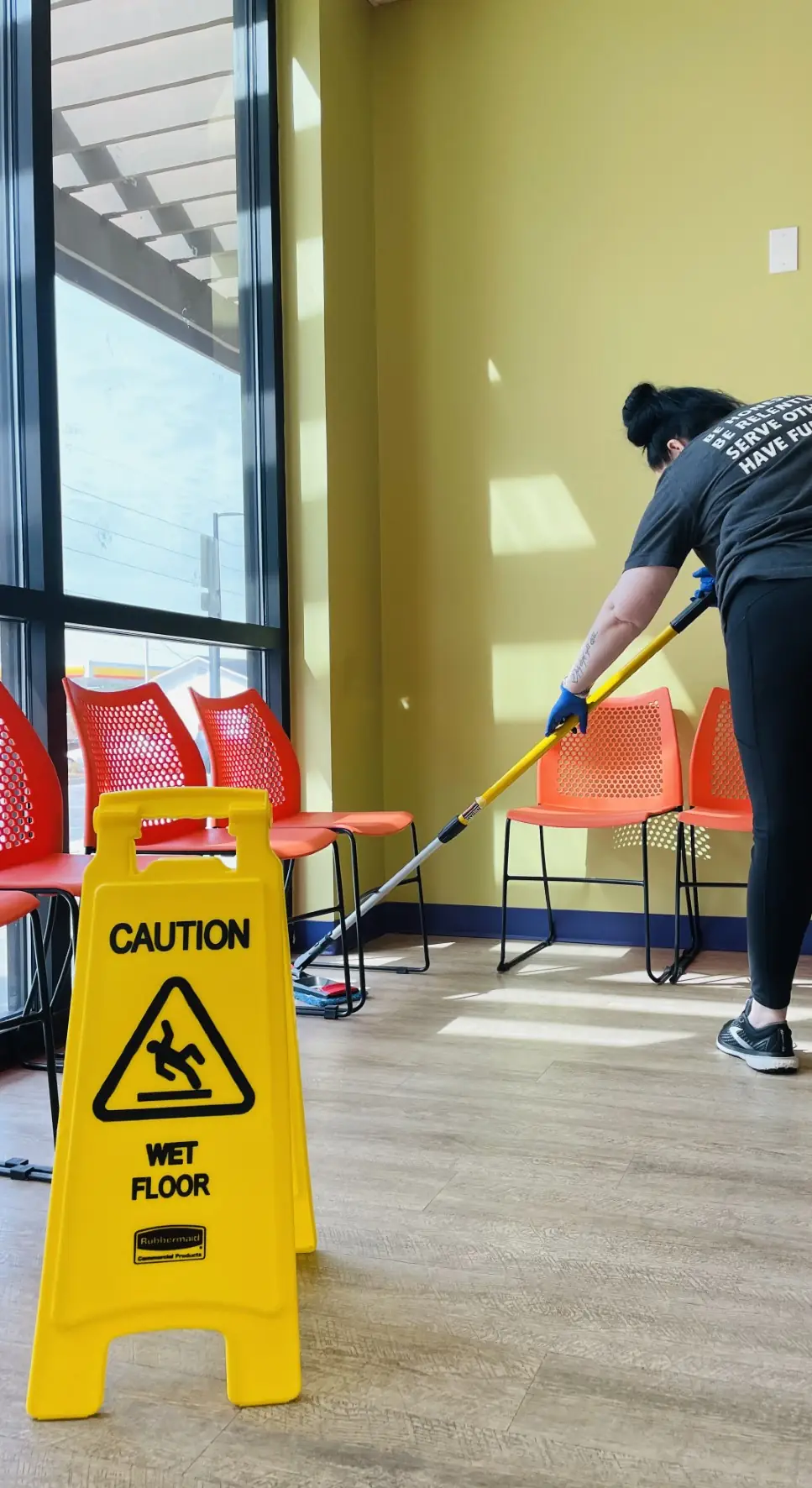
A disinfectant label assumes the surface is clean. Soil blocks contact between product and surface and can use up the product before it reaches what is underneath. This is why our process separates the two.
Skipping the clean step, wiping early or reusing one cloth across rooms are the three most common reasons disinfection does not do what the label describes.
Mapping and frequency
Disinfecting every surface in a building every night is neither practical nor useful. We focus the work where hands go.
Disinfection reduces germs on surfaces. It does not replace handwashing, ventilation or staying home when sick, and it is not a guarantee against illness. We will say so plainly in the proposal.
Pre-inspection, dust, trash, wipe down, restrooms and break rooms, floors, final inspection. Same order, every service night, every building we clean.
Nightly checklist
Pre-inspection walk
Dust — Top-Down
Trash and Recycling
Wipe Down and Disinfect
Restrooms and Break Rooms
Floors
Final Inspection
GPS clock-in verified
Crew 04 · Mobile, AL
Cleaning removes soil, oils and film from a surface. Disinfecting uses a registered product to reduce germs on a surface that is already clean. Both are needed, in that order. Disinfectant applied over visible dirt is largely wasted, so we always clean first and disinfect second.
We use EPA-registered disinfectants chosen for the surface and setting. Each product is applied as the label directs and held for its full dwell time. If you have a specific concern, such as a named organism or a fragrance sensitivity, we adjust the product and confirm it against the label.
Dwell time is how long a surface must stay visibly wet with disinfectant for the product to work as labeled. It varies by product. Wiping a surface dry early cuts the contact time short, which is the most common way disinfection is done incorrectly. We follow the label for every product.
Yes. We offer on-demand disinfection of affected rooms, restrooms and shared high-touch areas, subject to crew availability. Call (251) 272-5088 and describe the space. We clean first, then disinfect, and we do not offer health guarantees, since we cannot control what happens after we leave.
Yes. Daycares focus on shared toys and low surfaces, gyms on equipment contact points and locker rooms, and medical offices on exam and treatment surfaces at documented contact times. Product choice and safe rinsing for food-contact or skin-contact surfaces change by setting.
Yes, for high-touch points and restrooms. Our process includes a wipe down and disinfect step on every service night. Broader or deeper disinfection, and on-demand work after illness, is scoped separately so you know what is covered and what is added.